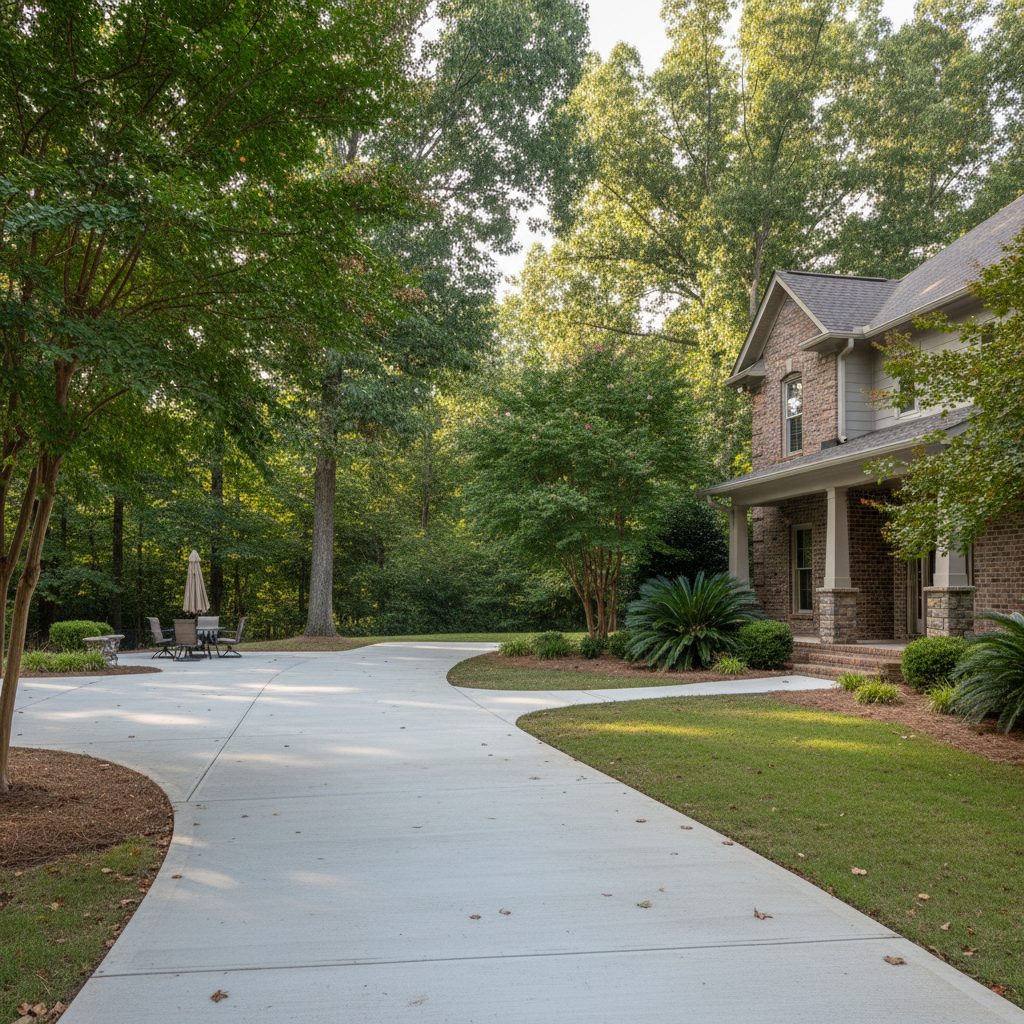
When's the best time to pour concrete around here? That's a question I get asked a lot, and honestly, it's not as simple as just picking a sunny day. Our Decatur weather, with its hot, humid summers and those occasional freezes, means you really have to think about when you schedule your concrete work if you want it to last.
The Sweet Spot: Spring & Fall
Seriously, if you can manage it, spring and fall are your absolute best friends for concrete installation in North Alabama. You're aiming for moderate temperatures, ideally somewhere between 50 and 70 degrees Fahrenheit, and not too much rain. In spring, right after the last frost but before that brutal summer heat really kicks in, is prime time. The crew gets good working conditions, and the concrete has a chance to cure properly without drying out too fast or freezing solid.
It's pretty much the same deal for fall. Once those scorching summer days are finally behind us, and we're not yet staring down winter's chill, it's perfect. The ground temperature stays stable, and you usually get a nice stretch of mild weather. This lets the concrete gain strength steadily, which is super important for how long it'll last. We've done a ton of driveways in places like the Old Decatur Historic District during these seasons, and they always turn out great because the conditions are just right, you know?
Summer: Proceed with Caution
Can we pour concrete in the summer? Yeah, we can. But it's definitely trickier, and it demands a lot more care. When it's 90 degrees and humid, like it often is here in July and August, concrete can dry out way too fast. That rapid drying can lead to surface cracks, and nobody wants those. We have to take extra precautions: adding retardants to slow the set, keeping the slab wet, and sometimes even pouring super early in the morning to beat the worst of the heat.
If you absolutely need concrete work done in the summer, make sure your contractor really knows their stuff with hot weather pours. They should be talking about things like proper curing compounds and keeping the concrete moist for longer. It's not impossible, but it’s definitely not ideal for getting the best possible finish and strength.
Winter: The Freeze-Thaw Challenge
Winter is generally the toughest time for pouring concrete. We don't get super harsh winters every year, but those freeze-thaw cycles are brutal on fresh concrete. Water expands when it freezes, and if your concrete hasn't gotten strong enough before that happens, the expansion can cause significant damage, like spalling or scaling. You'll literally see the surface start to flake off.
We can use accelerators and blankets to protect concrete in colder temps, but there's a limit. If the temperature is consistently below freezing, or if it's going to drop below freezing within a few days of the pour, it's usually best to just hold off. It's simply not worth risking your investment. Nobody wants to pay for a new patio only to see it degrade after the first cold snap.
Year-Round Protection: Keep It Strong
Once your concrete is in, no matter when it was poured, you've got to protect it. Here's what I tell all my clients:
- Seal it: This is probably the most important thing you can do. A good quality sealer protects against moisture, stains, and those pesky freeze-thaw cycles. You'll want to reseal every 2-5 years, depending on traffic and the type of sealer. Think of it like sunscreen for your concrete.
- Clean it: Don't let dirt, leaves, or other debris sit on your concrete for too long. They can trap moisture and encourage mold or mildew growth, especially in our humid climate. A simple sweep and an occasional pressure wash (on a low setting!) will do wonders.
- Watch for cracks: Small hairline cracks are normal; concrete shrinks a bit as it cures. But if you see cracks growing or getting wider, get them checked out. Sometimes we can fill them to prevent further damage.
- Drainage matters: Make sure water drains away from your concrete surfaces, not towards them. Poor drainage can undermine the base of your slab, leading to settling and cracking. This is especially true with our heavy clay soils around here; water pooling can really mess things up.
Understanding how our local climate impacts concrete installation and care is key to getting a durable, long-lasting surface. Don't rush the process, and always consider the weather. If you're planning a project and have questions about timing or protection, give us a call at Elite Concrete Solutions. We're happy to talk you through it.