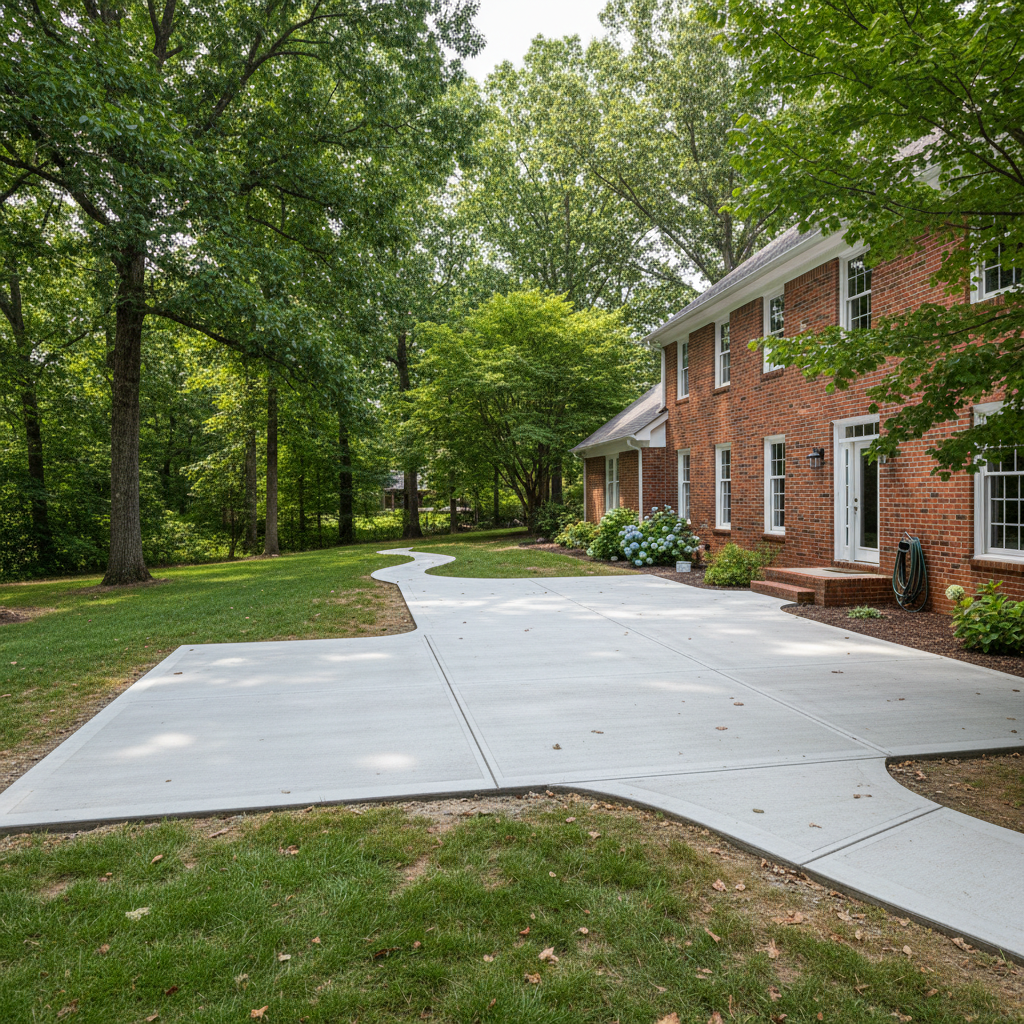
So, you're thinking about getting some concrete work done around your place? Maybe a new patio, a wider driveway, or a solid foundation for that new shed. That's a great idea! But here in Decatur, Alabama, you can't just pick any old day to pour concrete and expect it to hold up. Our climate — those hot, humid summers and sometimes surprisingly cold winters — really dictates when and how you should tackle these projects.
Why the Weather Matters More Than You'd Think
Concrete isn't just liquid rock that hardens; it's actually a chemical reaction. And just like any good chemistry experiment, temperature and moisture are super important. Pouring concrete when it's too hot, too cold, or even too wet can seriously mess with its strength, how long it lasts, and even how it looks years down the road. We've seen plenty of jobs (not ours, thankfully!) that crack too soon or start to spall because someone rushed things or simply didn't understand our local conditions.
The Sweet Spot: Spring and Fall
If you ask me, or really, most experienced concrete pros around here, the absolute best times to pour concrete in Decatur are spring and fall. Think about it: you get those mild temperatures, usually somewhere between 50 and 70 degrees Fahrenheit. This lets the concrete cure slowly and evenly, which is exactly what you want for maximum strength. The ground isn't frozen, and it's not scorching hot either.
- Spring (March-May): This is after the last hard freezes but before that brutal summer heat really kicks in. You still have to watch out for those pop-up thunderstorms, sure, but generally, it's ideal.
- Fall (September-November): Once the summer humidity finally breaks and the temperatures start to cool down. Again, you avoid the extreme heat and the risk of flash drying.
These seasons give the concrete the perfect environment. It gains strength without getting stressed by drying too fast or by freezing water expanding inside it. It's all about that slow, steady cure, you know?
Summer Concrete: Tread Carefully
Can you pour concrete in the summer? Absolutely, we do it. But it's a lot trickier, and it demands extra care. When temperatures climb into the 90s, especially with our high humidity, concrete can dry out way too fast. This rapid drying leads to surface cracks, what we call plastic shrinkage cracks, because the surface shrinks quicker than the inside. It also makes the concrete much harder to finish properly.
If a summer pour is absolutely necessary, we take precautions. This means things like pouring in the early morning, using special admixtures to slow down the set time, and immediately applying curing compounds or keeping the concrete wet with burlap and sprinklers for several days. It's more work, more risk, and honestly, not ideal if you're aiming for a really long-lasting finish.
Winter Concrete: A Real Headache
Winter in Decatur isn't always freezing, but we certainly get our share of cold snaps. Pouring concrete when temperatures are consistently below 40 degrees Fahrenheit is a big no-no, unless you're ready to take some serious — and often costly — measures. Water in the mix can freeze before the concrete gains enough strength, causing it to lose up to 50% of its ultimate strength. We're talking about a weak, crumbly mess, plain and simple.
If a winter pour is truly unavoidable, you're looking at things like heated blankets, insulating tarps, and specialized concrete mixes with accelerators. It's possible for critical projects, yes, but for your average driveway or patio, it's just not worth the extra expense and potential headaches. I've seen folks in the Old Decatur historic district try to rush winter pours for a new walkway, only to have it spall within a year because they didn't account for the overnight freezes.
Protecting Your Investment Year-Round
Once your concrete is in, the job isn't entirely finished, is it? Proper maintenance is key to making sure it lasts. Here's what I tell all my Elite Concrete Solutions customers:
- Curing is Crucial: For the first week or so, keep that concrete moist. This is probably the single most important thing you can do. We'll handle the initial curing, but understanding why it's done helps.
- Seal It: After about 28 days, once the concrete is fully cured, apply a good quality concrete sealer. This acts like a shield against water, oil, chemicals, and even those pesky freeze-thaw cycles we get around here. Reapply every 2-5 years, depending on the sealer and how much traffic it sees.
- Clean Regularly: Sweep off debris. Wash away spills quickly. Don't let leaves sit and decompose on your patio, as they can stain.
- Avoid De-icing Salts: This is a big one. While rock salt melts ice, it's terrible for concrete, especially newer concrete. It causes spalling and deterioration. Use sand for traction instead, or a concrete-safe de-icer if you absolutely must.
- Watch for Cracks: Small hairline cracks are normal; concrete shrinks, it's just what it does. But if you see larger, expanding cracks, get them looked at. Sometimes they can be filled to prevent further damage.
Getting your concrete project done right means more than just a good pour; it means understanding our local climate and planning accordingly. When you work with Elite Concrete Solutions, we'll always guide you on the best timing and care practices to ensure your investment stands the test of time. Don't rush it, plan it, and you'll have beautiful, durable concrete for years to come.